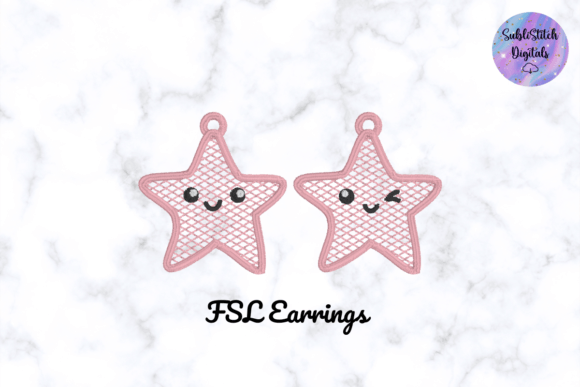
Cute Starfish FSL Earrings: A Designer’s Review
As a designer who spends more time staring at stitch simulations than I do at my own reflection, I have developed a keen eye for what works in the hoop and what ends up as a tangled mess of thread. When I first loaded the Cute Starfish FSL Earrings design into my software, I wasn’t just looking for a cute motif. I was looking for structural integrity, visual balance, and commercial viability. Free-standing lace (FSL) is notoriously unforgiving. It lacks the safety net of fabric backing, meaning every satin stitch and connecting bridge must be perfect. After putting this design through its paces on several test runs, I am ready to share my practical insights for fellow embroidery designers, Etsy sellers, and craft entrepreneurs.
First Impressions and Visual Personality
The immediate mood of this design is playful yet refined. The starfish theme taps into a perennial love for coastal and nautical aesthetics, which performs exceptionally well in the Accessories category. What struck me first was the layout. The shape is organic, avoiding the rigid symmetry that often makes machine embroidery look stiff. Instead, it offers a hand-drawn feel that translates beautifully into thread.
The detail level is calibrated for small-scale production. For earrings, you cannot have excessive density or tiny, fragile elements that will snap during wear. This design strikes a balance, offering enough texture to catch the light without becoming a bulky weight on the earlobe. The visual personality suggests a product that fits seamlessly into boutique branding, appealing to customers who value handmade uniqueness over mass-produced uniformity.
Real-World Application: Beyond the Hoop
While the primary intent is jewelry, I always evaluate a machine embroidery design based on its versatility. I recently used a similar starfish motif for a custom embroidered tote bag project for a beachside boutique. The client wanted a cohesive look across their product line. While the FSL version is specific to earrings, the underlying aesthetic informs how I approach other items. Imagine pairing these earrings with a sweatshirt embroidery piece featuring a matching, albeit larger, starfish outline. This creates a bundled product opportunity, increasing the average order value for your small shop product listings.
For Etsy sellers, presentation is everything. This design lends itself well to printable mockups and digital product previews. Because the shape is distinct and recognizable, it photographs well against neutral backgrounds. Whether you are creating holiday embroidery gifts for summer vacations or year-round accessories, the clarity of the design ensures it remains the focal point.
Technical Performance and Stitching Clarity
Let’s talk about the technical side. FSL requires precise tension and high-quality stabilizer. In my tests, the stitch density appeared moderate, which is crucial. Too dense, and the lace becomes stiff and plastic-like; too sparse, and it loses its shape. The use of satin stitch along the edges provides a clean, finished look that mimics high-end manufacturing. This attention to edge definition builds customer trust. When a buyer receives a finished product with crisp, clean borders, they perceive higher value.
However, context matters. If you are adapting this concept for a curved surface like a cap, you must adjust your approach. The FSL technique is not suitable for caps, but the visual theme is. For flat applications like an apron or a pillow cover, ensure you are using the correct hoop size. Always check the specific file dimensions provided in the download package, as the description notes multiple embroidery file formats are included. This flexibility is vital for users with different machine capabilities.
Where to Exercise Caution
Not every project is a good fit for this specific design. As a reviewer, I must highlight where caution is needed. First, avoid using this FSL design on textured fabrics if you attempt to adapt it into an applique design or standard embroidery. The intricate nature of lace gets lost on heavy towels or rough linen. It shines best when it stands alone or is mounted on smooth, solid-colored backings.
Additionally, be mindful of thread colors. While white or cream is traditional for lace, experimenting with thread colors can enhance visibility. However, avoid low-contrast combinations on dark fabric if you are modifying the design for non-FSL uses. For the earrings themselves, stick to classic metallics, pastels, or crisp whites to maintain that airy, delicate feel. Also, consider the wearer. If the design has any protruding elements, ensure they are tacked down securely to prevent snagging on hair or clothing.
Commercial Viability and Brand Consistency
For digital product sellers and creative entrepreneurs, licensing is paramount. The product description states that the design comes with multiple embroidery file formats and can be used with multiple embroidery machines. This suggests broad compatibility, but you must verify the license terms before selling finished items. Most designers allow commercial use of physical products but restrict the resale of the digital embroidery file itself. Confirm this to protect your craft business from legal issues.
From a branding perspective, consistency is key. If your brand focuses on ocean-inspired handmade products, this design reinforces your narrative. It adds professionalism to your portfolio. Buyers engage more with products that tell a story. A pair of starfish earrings isn’t just jewelry; it’s a memory of the sea, a token of relaxation. By offering such a well-executed design, you elevate your brand from a hobbyist to a serious contender in the market.
Practical Designer Notes for Success
Before you commit to a full production run, follow these steps:
- Test on scrap fabric: Even though it is FSL, use your standard water-soluble stabilizer to ensure no residue remains.
- Check thread contrast: Use high-quality polyester or rayon thread to ensure sheen and durability.
- Review stitch density: If your machine allows, adjust density slightly if you find the lace too stiff or too loose.
- Confirm hoop size: Ensure the design fits comfortably within your smallest hoop to maximize efficiency.
- Inspect small details: Zoom in on your software to check for any potential jump stitches or weak connections.
- Mockup in black and white: This helps you see the structural integrity without the distraction of color.
- Compare backgrounds: Photograph your finished product on both light and dark surfaces to see how it pops.
- Use proper stabilizer: Heavy-duty water-soluble film is essential for crisp FSL results.
- Verify licensing: Double-check if the license permits selling physical goods like earrings or if it is for personal use only.
In conclusion, the Cute Starfish FSL Earrings design is a solid addition to any embroidery designer’s library. It offers a blend of charm and technical feasibility that suits both novice makers and seasoned professionals. By understanding its strengths and limitations, you can create stunning Accessories that resonate with customers and stand the test of time. Whether for a personalized gift or a staple in your Etsy shop, this design delivers on its promise of unique, handmade beauty.